 China Guizhou Travel Recommender
Best Time to Visit Guizhou: A Month-by-Month Planning Guide
For most travellers the best time to visit Guizhou is late April to early June, when Huangguoshu Waterfall runs strong ahead of the heaviest rain, and mid-September to late October, when skies are at their clearest. Which window you pick depends on whether you want waterfall volume or clear light, and on steering around China's domestic holiday peaks.
How Guizhou's Climate Actually Behaves
Guizhou sits on the eastern slope of the Yunnan–Guizhou Plateau, and its subtropical highland climate behaves differently from the rest of southern China. Summers are famously mild, which is why Guiyang has a long-standing reputation as a cool-summer city that pulls in domestic heat-escape travel, while winters are damp and grey rather than brutally cold. The old local saying about Guizhou never seeing three straight days of clear sky is only half a joke: cloud cover is the default state, and rain concentrates in a late-spring-to-summer window rather than spreading evenly across the year.
Elevation is the second variable. On the same day, the river valleys around Libo Xiaoqikong can feel warm and humid while the summit of Fanjing Mountain in Tongren sits in cold fog. One provincial forecast is therefore useless for route planning; you have to think in elevation bands and check forecasts stop by stop.
For timing purposes, three climate facts drive everything below: waterfall volume peaks with the summer rains; the clearest, driest light arrives in autumn; and the cold, foggy, lowest-crowd window runs from December to February.
- Pack for mist and drizzle, not just downpours: a rain shell, quick-dry layers, and shoes with real grip for the wet karst boardwalks at Libo Xiaoqikong and the spray-soaked paths at Huangguoshu Waterfall.
- Check separate forecasts for Guiyang, Anshun (Huangguoshu Waterfall), Kaili (Xijiang Qianhu Miao Village), Tongren (Fanjing Mountain) and Libo, because conditions differ sharply by elevation.
- If waterfall volume is your priority, accept the rain trade-off and target May to August; if clear photography light is your priority, target late September to early November.
- Plan photo-critical stops such as the Fanjing Mountain summit and Wanfenglin near Xingyi for mornings, when cloud is most likely to lift.
Spring Month by Month: March, April and May
Spring is when Guizhou turns from grey to green, waterfalls begin to fill from spring rain, and the ethnic-festival calendar opens. Crowds stay modest outside two short domestic spikes: the Qingming holiday in early April and the Labour Day holiday at the start of May.
The headline draw of the season is the azalea bloom across the Baili Azalea scenic belt in Bijie's Dafang and Qianxi counties, a rolling hill-country display of wild azaleas that typically peaks early to mid-April.
- March: cool, grey and quiet; azaleas begin opening late in the month at the Baili Azalea scenic belt; a good month for city-based sightseeing around Guiyang, including Qingyan Ancient Town and Jiaxiu Tower, with easy booking flexibility.
- April: azalea peak across Bijie; the Sisters' Meal Festival in Taijiang County, held around the middle of the third lunar month and usually landing in April, is one of the signature spring events of the Miao calendar in Qiandongnan; expect a short domestic bump around Qingming in the first week.
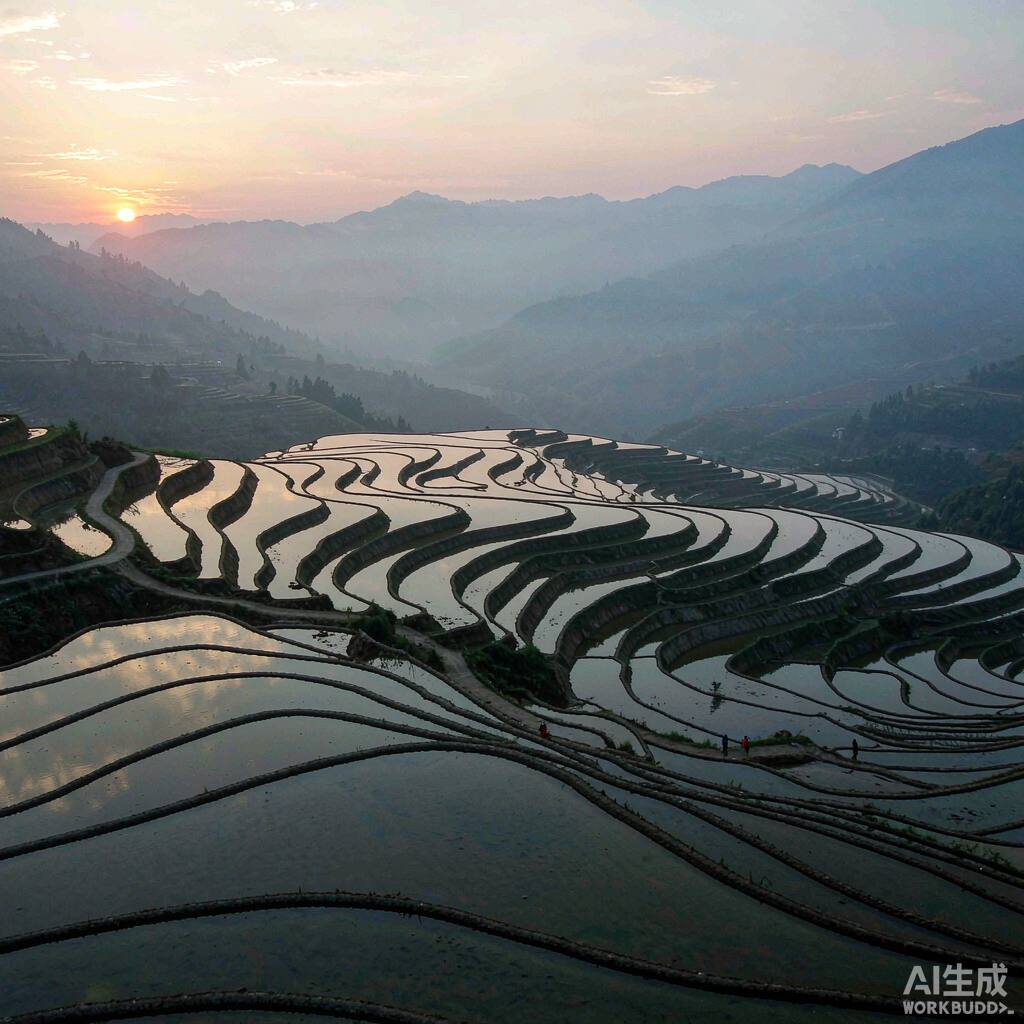
- May: flow at Huangguoshu Waterfall strengthens week by week; hillsides are at their greenest; the Jiabang Terraces near Congjiang are flooded for the planting season; avoid the Labour Day holiday at the start of the month or book transport and rooms well ahead.
Summer Month by Month: June, July and August
Summer is the paradox season: the rains are heaviest, the waterfall volume is best, the air stays cool enough that Guiyang markets itself as a summer retreat, and domestic crowds hit their annual peak because school is out. Visiting in July or August means sharing the province with the largest domestic flow of the year.
The rain tends to arrive as heavy showers and overnight falls rather than all-day drizzle, and it is precisely this water that puts the Huangguoshu Waterfall scenic area, including its Doupotang and Tianxingqiao sections, at full volume.
- June: the rainy season sets in properly; Huangguoshu Waterfall and Libo Xiaoqikong are at their most dramatic and their most slippery; carry a proper rain shell rather than relying on disposable ponchos.
- July: usually among the wettest months; the Yi Torch Festival around Weining and Panzhou, held around the 24th day of the sixth lunar month and usually falling in late July, is the big ethnic event of the season in the west; Fanjing Mountain is lush but frequently cloud-capped, so start ascents early.
- August: school-holiday crowds continue; late August begins to dry out and is a smart shoulder pick; book Xijiang Qianhu Miao Village lodging early for this window, since village lodging is limited relative to demand.
Autumn Month by Month: September, October and November
Autumn is the season most often recommended for first-time visitors: the rains taper off, the light clears, the rice terraces turn gold, and the biggest events of the Miao calendar arrive.
The one complication is the National Day Golden Week that begins on October 1, the single busiest travel window in China, which lands exactly in the best weather of the year. The standard planner's move is to travel either side of it, ideally mid-October onward.
- September: rain eases and domestic crowds drop once schools resume; the Jiabang Terraces near Congjiang and the Dong villages around Zhaoxing move into harvest; Wanfenglin and Maling River Canyon near Xingyi come into their clearest light.
- October: the clearest, driest month of the year, but the Golden Week that starts on October 1 is the most crowded stretch in the province; arriving after the holiday gets you prime conditions with thin crowds, and autumn colour starts appearing at elevation around Fanjing Mountain late in the month.
- November: Miao New Year in Leishan County, held in the tenth lunar month and usually landing in November, is one of the most significant annual events of the Miao communities around Kaili; the Chishui Danxia landform and Chishui Bamboo Sea take on autumn colour; days are cool but often clear.
Winter Month by Month: December, January and February
Winter is Guizhou's low season: grey, damp, frequently foggy, and the quietest time at every major site. It is not a bad time to come; it is simply a different trip, built around hot springs, towns, food and village life rather than big-landscape photography.
Two cautions apply. Cold snaps can put ice on high-elevation roads and mountain access. And the Spring Festival period, whenever it falls in January or February, brings a short but intense domestic surge, alongside genuine New Year festivities in the Miao and Dong villages that many travellers specifically come for.
- December: the quietest month at headline sites such as Huangguoshu Waterfall and Xijiang Qianhu Miao Village; grey and damp in Guiyang, with weekend demand from locals around hot-spring areas such as Xifeng County near Guiyang; a good month for town-and-food itineraries based on Qingyan Ancient Town and Guiyang.
- January: the coldest and foggiest month; check road and scenic-area conditions before driving toward high-elevation stops such as Fanjing Mountain, since icy patches are possible; if Spring Festival falls in January, expect the year's biggest domestic travel surge alongside real village New Year activity.
- February: if lunar new year falls here, the weeks that follow bring lusheng gatherings across Qiandongnan, including the well-known Zhouxi Lusheng Festival near Kaili; late February can show early blossom in sheltered low valleys; still cold at elevation.
The Chinese Holiday Calendar Outweighs the Weather
One published figure explains why the domestic calendar dominates: Guizhou's international air ports recorded 74,000 foreign-national arrivals in 2025, up 267% year on year, and that is a border-control count that excludes Hong Kong, Macao and Taiwan residents. Impressive growth, but still a small fraction of the province's total visitor flow, which is overwhelmingly domestic. Hotels, trains, ticketing systems and village homestays are calibrated to Chinese holiday patterns, so your crowd experience follows the Chinese calendar, not the Western one.
For an independent planner, that means the first question is not what the weather will be, but which week it is in the Chinese calendar.
- Treat these as red-flag windows: the National Day Golden Week starting October 1, the Labour Day holiday at the start of May, the Qingming holiday in early April, the Spring Festival fortnight in late January or February, and the July–August school holidays.
- Visit headline sites on weekdays in any season: Xijiang Qianhu Miao Village and Huangguoshu Waterfall both work as stops from Guiyang, and weekday visitation is consistently lighter.
- If your dates are locked into a Golden Week, invert the standard route: start in the less-trafficked east, around Tongren and Fanjing Mountain, Zhaoxing Dong Village and Congjiang, while domestic traffic concentrates on Huangguoshu Waterfall and Xijiang Qianhu Miao Village, then swing west after the peak days.
- Outside holiday windows, Guizhou's transport and lodging generally tolerate a flexible, book-as-you-go style, which is the opposite of what Golden Week demands.
Entry Rules and What Guizhou's Arrival Numbers Mean for Your Dates
Timing advice is useless if your entry route does not allow the trip, so settle this first. China maintains mutual visa-free agreements with 29 countries, including Malaysia, Thailand and Singapore; for those nationalities, entry is straightforward and your timing decision is purely about weather, festivals and crowds. Separately, the 240-hour (ten-day) visa-free transit scheme covers eligible nationalities travelling onward to a third country; it is a transit facility, not a general entry route.
A common confusion is worth clearing up: the 74,000 foreign-national arrivals figure is a border-control count at Guizhou's international air ports. It is not a count of visa-free entries, and it excludes Hong Kong, Macao and Taiwan residents. The two categories measure different things, and mixing them leads to wrong assumptions about how busy or accessible the province is for foreign visitors.
The transit scheme carries a hard planning implication: entering under 240-hour transit means your Guizhou window is bounded by your onward ticket to a third country, which in practice favours a Guiyang-centred loop, with Huangguoshu Waterfall in Anshun to the west and Xijiang Qianhu Miao Village near Kaili to the east, over a full west-to-east sweep that adds Tongren, Chishui and Weining. Policies change, so verify the current country lists, conditions and documentation with official sources such as your nearest Chinese embassy or consulate and the National Immigration Administration before booking anything.
- Decide your entry route before fixing dates: mutual visa-free entry (29 countries, including Malaysia, Thailand and Singapore), 240-hour transit (eligible nationalities, onward travel to a third country required), or a standard visa.
- If using 240-hour transit, plan a loop out of Guiyang rather than a one-way traverse, and keep your onward-ticket timing inside the window.
- Re-check official sources shortly before travel: both the mutual agreements and the transit scheme have been revised repeatedly in recent years, and second-hand forum information goes stale quickly.
Matching the Month to the Trip You Actually Want
The question of the best month is really a question about the trip you are planning. The planners behind China Guizhou Travel Recommender, who charge a flat fee to design routes rather than sell bookings, sequence Guizhou by trip type first and month second, because the same province rewards different travellers in different seasons.
Use the following pairings to fix your dates before you book anything.
- Waterfall-first trip (Huangguoshu Waterfall scenic area in Anshun, the waterfalls of Chishui): May to August for volume, with full rain protection and a waterproof camera bag.
- Photography-first trip: late September to early November for clear light, golden terraces and autumn colour at the Chishui Bamboo Sea.
- Festival-first trip: anchor on the lunar calendar, since the Sisters' Meal Festival in Taijiang County (spring), the Torch Festival in Weining and Panzhou (summer) and Miao New Year in Leishan County (autumn) all shift on the Gregorian calendar each year; convert the lunar dates for your travel year before booking.
- Cool-summer family trip: base in Guiyang and radiate out to Qingyan Ancient Town, Huangguoshu Waterfall and Kaili, accepting the domestic crowds as the price of the season.
- Quiet-season trip: December to February outside Spring Festival, built on towns, food, hot springs and village life rather than headline landscapes.
FAQ
What is the single best month to visit Guizhou?
If you must choose one, take mid-to-late October, after the National Day Golden Week ends: it combines the clearest and driest weather of the year, thin crowds and harvest scenery, and it sits just ahead of Miao New Year in Leishan County in November. Late April to early June is the close runner-up if waterfall volume matters more to you than clear light.
Is summer too rainy to enjoy Guizhou?
No. Summer rain tends to arrive as heavy showers and overnight falls rather than all-day drizzle, and it is exactly this water that puts Huangguoshu Waterfall at full volume. The real summer trade-offs are slippery trails and the year's biggest domestic crowds, not unvisitability.
When do Guizhou's ethnic festivals take place?
Most follow the lunar calendar, so Gregorian dates shift every year. The Sisters' Meal Festival in Taijiang County usually falls in April, the Torch Festival in Weining and Panzhou usually in late July, and Miao New Year in Leishan County usually in November. Convert the lunar dates for your travel year and confirm with local announcements before booking.
Do I need a visa to visit Guizhou?
It depends on your nationality. China has mutual visa-free agreements with 29 countries including Malaysia, Thailand and Singapore, and a separate 240-hour visa-free transit scheme for eligible nationalities travelling onward to a third country. Both policies change, so verify the current rules with official sources such as a Chinese embassy or consulate, or the National Immigration Administration, before you book.