 China Guizhou Travel Recommender
Huangguoshu Waterfall guide: routes, viewpoints and how to get there
Huangguoshu Waterfall is a full-day, three-area park — Doupotang Waterfall, the main falls with the Water Curtain Cave, and Tianxingqiao Scenic Area — best reached by high-speed rail to Anshun West Railway Station plus a road transfer, and best toured in a deliberate sequence rather than by following the crowds.
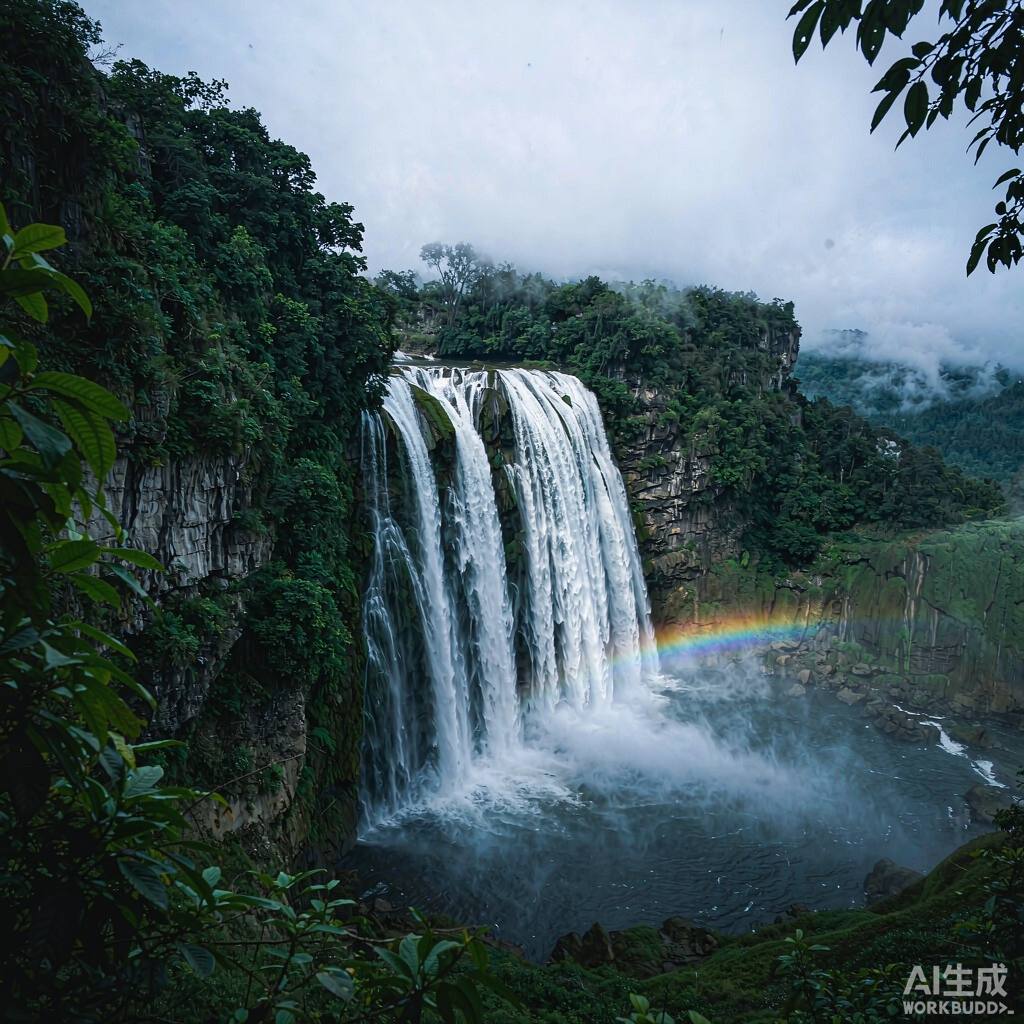
What the Huangguoshu Scenic Area actually contains
Huangguoshu Waterfall is not a single viewpoint. The scenic area in Zhenning Buyi and Miao Autonomous County, Anshun, is a linear park along the Baishui River with three separately named areas — Doupotang Waterfall upstream, the main Huangguoshu Waterfall in the middle, and Tianxingqiao Scenic Area downstream — linked by an internal shuttle. Planning a visit means sequencing three stops, not choosing one.
The main waterfall, among the largest in China, is the anchor, but the park takes a full day because of the variety: a wide cascade you can photograph in minutes, a plunge fall you can walk behind, and a karst landscape that demands the longest walk of the three. Treat the ticket as covering a route, not a monument.
- Doupotang Waterfall — the wide, low cascade at the top of the system; it appeared in the 1986 CCTV television production of Journey to the West; the shortest walk of the three areas.
- Huangguoshu Waterfall (main falls) — viewing decks above the Rhinoceros Pool plus the Water Curtain Cave, a passage behind the falling water with openings onto the curtain; expect heavy spray.
- Tianxingqiao Scenic Area — a karst stone forest set in water, stepping stones numbered as days of the year, Tianxing Cave, and the Silver Chain Falls in the lower section; the longest walk of the three.
Two route sequences — and when each one works
The order in which you visit the three areas is the biggest planning decision at Huangguoshu, because the shuttle makes several orders possible and the queue for the Water Curtain Cave builds through the day. The planners behind this site — an independent route-planning service that charges a flat fee, sells no tickets or tours, and adds no booking markups — build the order around two variables: crowd timing and how much walking the day can absorb.
Route A, crowd-first, is the default for peak season and weekends: go to the main waterfall as early as you can manage, while the tour-bus waves are still arriving, then move to Doupotang Waterfall, and finish with Tianxingqiao Scenic Area, where the pace is yours to set and queues barely exist.
Route B, geography-first, suits the off-season: Doupotang Waterfall as a short warm-up, the main falls next, then the long Tianxingqiao walk. The downstream drift matches how most people's energy fades across a park day.
One warning the site's planners repeat: many group itineraries walk only the upper half of Tianxingqiao Scenic Area and turn back before the lower section — which is exactly where the Silver Chain Falls sits. If you are planning independently and have the legs for it, do the full loop; if you are comparing packaged tours, ask specifically whether the lower section is included.
- Route A (peak season, weekends): shuttle straight to the main Huangguoshu Waterfall; walk the Rhinoceros Pool decks; queue for the Water Curtain Cave while morning lines are shortest; shuttle to Doupotang Waterfall for a short stop; finish with the full upper-plus-lower Tianxingqiao loop ending at the Silver Chain Falls.
- Route B (off-season): start at Doupotang Waterfall as a warm-up; move to the main falls and take the Water Curtain Cave at whatever pace the queue allows; finish with the full Tianxingqiao loop while you still have daylight.
- Either route: confirm on the day whether the Water Curtain Cave is open, and be ready to swap the order if it is closed.
Viewpoints at the main waterfall: what each one gives you
The main-falls area is a chain of positions, not one lookout. The decks above the Rhinoceros Pool give the classic full-curtain view and the sense of scale; the higher platforms along the path give profile views of the cascade against the cliff; and the Water Curtain Cave openings give the behind-the-curtain view that no other stop in the park offers.
Two practical notes: the spray near the pool and inside the cave will soak you — lightweight ponchos are sold around the park, and grippy footwear matters on wet stone. And the Water Curtain Cave can close when the Baishui River runs at flood peak, so check its status on the day through official park channels rather than assuming.
On sunny mornings, rainbows regularly form in the spray above the Rhinoceros Pool — a well-known effect, and one more argument for the early-start version of Route A, which pairs thinner queues with better light.
- Rhinoceros Pool decks — the full-face view of the curtain; the classic photograph.
- Upper path platforms — profile views of the falls against the cliff wall.
- Water Curtain Cave — openings onto the back of the falling water; the park's signature experience; may close at flood peak.
- Spray management — poncho, waterproofing for phones and cameras, non-slip shoes.
How to get there: Guiyang to Anshun West to the park
The standard approach from Guiyang is the Shanghai–Kunming high-speed railway to Anshun West Railway Station, then a road transfer to the scenic area. Trains between Guiyang and Anshun run frequently through the day; book and check current times on China Railway's official 12306 platform rather than relying on third-party timetables, which this site lists for reference only.
From Anshun West Railway Station the remaining leg is by road: a taxi or ride-hailing car, a local bus connection toward the park, or — if you started in Guiyang — one of the direct tourist coaches that run from Guiyang to the scenic area itself. Self-drivers use the expressway linking Guiyang and Kunming, which has an exit serving the Huangguoshu area.
A same-day return to Guiyang is feasible but makes the day tight. The alternative the site's planners more often recommend is an overnight in Anshun, which opens the next morning for Longgong (Dragon Palace) Scenic Area — Anshun's other major karst sight — or for folding Huangguoshu into a wider Guiyang–Anshun–southwest Guizhou loop instead of treating it as an isolated day trip.
- From Guiyang: high-speed rail (primarily from Guiyang North Railway Station) to Anshun West Railway Station; book via the official 12306 platform.
- From Anshun West: taxi or ride-hailing, or a local bus toward the scenic area; aim for the visitor centre as your drop-off, not a random gate.
- Direct from Guiyang without rail: tourist coaches run to the scenic area — confirm the current departure point and timing before relying on them.
- Self-drive: the Guiyang–Kunming expressway serves the Huangguoshu area with its own exit; parking sits near the visitor centre.
- If time allows, overnight in Anshun and add Longgong Scenic Area rather than rushing the return.
Water level and season: what changes through the year
The Baishui River drives the whole experience. In and around the summer rainy season the falls run at full weight — the curtain is thick, the spray reaches the viewing decks, and the Rhinoceros Pool churns — but that is also when the Water Curtain Cave is most likely to close at flood peaks and when the park is busiest. In the drier months the curtain thins, walking is easier, and crowds drop, at the cost of drama.
There is no time of year when the falls stop running; the choice is between force and comfort. If the Water Curtain Cave is your priority, build in flexibility — visit in a shoulder period, or be ready to swap your route order if the cave is closed on the day.
- Rainy-season visit: maximum water and spray, highest chance of a Water Curtain Cave closure; a poncho is non-negotiable.
- Dry-season visit: thinner curtain, easier walking, fewer people; better conditions for photographing the cave openings.
- Any season: check the Water Curtain Cave's day-of status before committing to a route order.
Entry rules for international visitors: what the arrival numbers do and don't mean
Guizhou's international air ports recorded 74,000 foreign-national arrivals in 2025, up 267% year on year — a striking jump, but a border-control count. It excludes Hong Kong, Macao and Taiwan residents, and it says nothing about how those travellers entered. It does not mean 'no visa needed for Guizhou'.
Your own situation falls into one of three boxes. China holds mutual visa-free agreements with 29 countries, including Malaysia, Thailand and Singapore — citizens of those countries can currently enter for leisure without a visa. The 240-hour visa-free transit is a separate scheme: it applies to eligible nationalities travelling onward to a third country, requires a confirmed onward ticket, and limits where you may travel while in transit — so whether it covers a Guizhou itinerary at all depends on your nationality and your routing. Everyone else needs a visa arranged before travel.
For a Huangguoshu trip the practical difference is real. A mutual-visa-free traveller can fly into Guiyang Longdongbao International Airport and travel freely; a transit traveller's whole route — including where Huangguoshu sits in it — must fit the scheme's permitted areas and onward-travel requirement. Policies change: verify your category with official sources, such as the Chinese embassy or consulate for your country, the National Immigration Administration, and your airline, before booking flights.
- Check whether your nationality is among China's mutual visa-free countries (29 at the time of writing, including Malaysia, Thailand and Singapore).
- If you plan to use the 240-hour visa-free transit, confirm your nationality is eligible, that your itinerary ends in a third country, and that Guizhou falls within the scheme's permitted travel area under current rules.
- Book flights only after confirming your entry category with official sources — policies change.
FAQ
Can I do Huangguoshu Waterfall as a day trip from Guiyang?
Yes. The high-speed rail link from Guiyang to Anshun West Railway Station plus a road transfer makes it a feasible full-day trip. Allow the entire day — the three areas plus shuttle transfers add up — and consider an overnight in Anshun if you want to add Longgong Scenic Area or avoid a rushed evening return.
Which order should I visit the three areas in?
In peak season, go to the main Huangguoshu Waterfall first to beat the Water Curtain Cave queues, then Doupotang Waterfall, then the full Tianxingqiao loop. Off-season, Doupotang, then the main falls, then Tianxingqiao flows more naturally. Either way, do not skip the lower section of Tianxingqiao Scenic Area, where the Silver Chain Falls sits.
Is the Water Curtain Cave always open?
No. It can close when the Baishui River runs at flood peak, which is most likely in the rainy season. Check its status on the day through official park channels and be ready to reorder your route.
Do I need a visa to visit Guizhou?
It depends on your nationality. Citizens of China's 29 mutual visa-free countries — including Malaysia, Thailand and Singapore — can currently enter for leisure without a visa; the 240-hour visa-free transit is a separate scheme requiring onward travel to a third country; other nationalities need a visa arranged in advance. Policies change, so verify with official sources before booking.