 China Guizhou Travel Recommender
Xijiang Qianhu Miao Village Guide: What to See, Stay and Avoid
Xijiang Qianhu Miao Village rewards an overnight stay rather than a day trip. The viewing-platform panorama, the lit-up stilted houses after dark and the back lanes above the Baishui River are the core sights; peak-day crowds, inauthentic 'Miao silver' and heavy luggage on the pedestrian slopes are the main things to avoid.
What Xijiang Qianhu Miao Village Is, and Why It Is on Nearly Every First Route
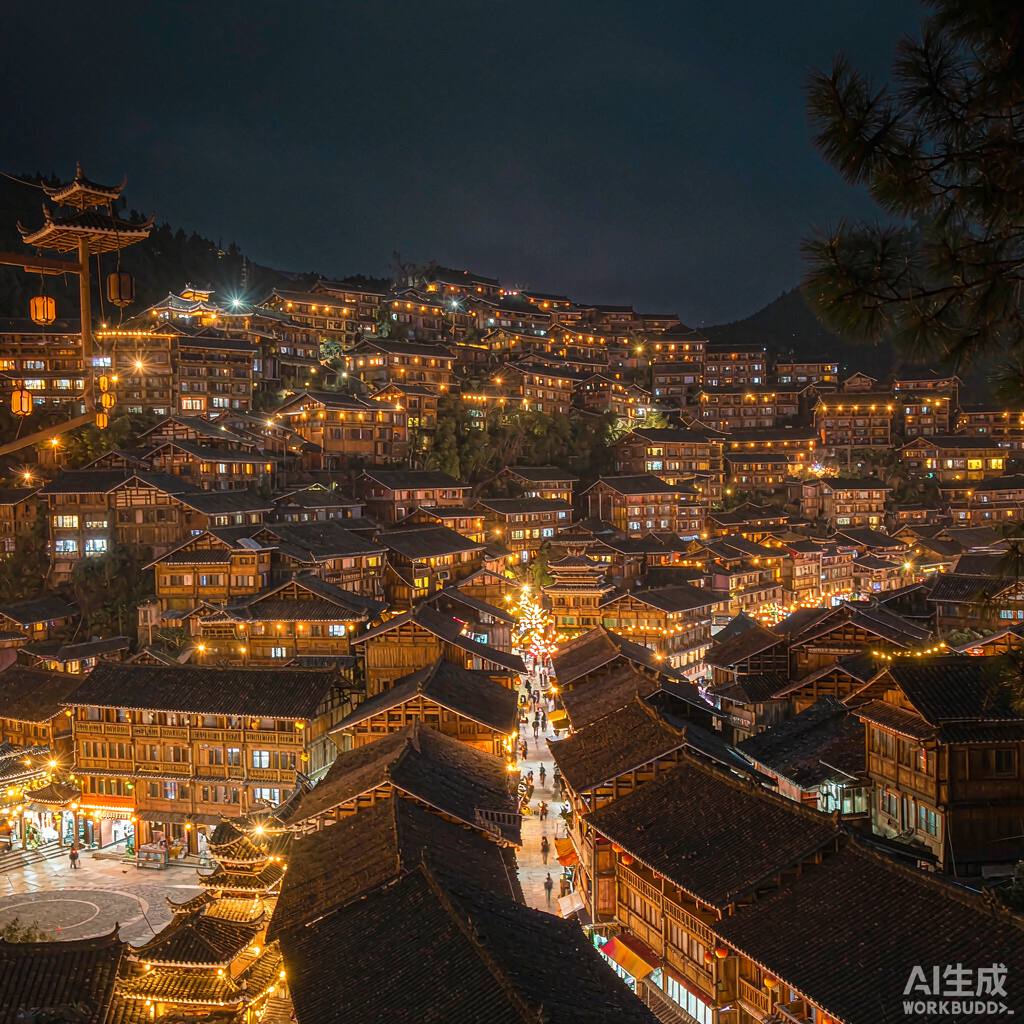
Xijiang Qianhu Miao Village sits in Leishan County, in the Qiandongnan Miao and Dong Autonomous Prefecture of southeastern Guizhou, roughly an hour by road from Kaili, the prefecture's transport hub. 'Qianhu' means 'thousand households', and the name is close to literal: Xijiang is commonly described as the largest Miao settlement in China, a dense cascade of stilted wooden houses (diaojiaolou) climbing two slopes that face each other across the Baishui River.
The framing the site's route planners use is blunt: Xijiang Qianhu Miao Village is at once the most impressive Miao architectural panorama in Guizhou and the most commercialized Miao destination in Guizhou. That trade-off is not a reason to skip it — it is a reason to plan it deliberately, with an overnight on a weekday where possible, and paired with a smaller Miao village for contrast.
What to See: The Sights That Earn the Trip
Xijiang Qianhu Miao Village divides into three bands — the Baishui River level, the built slopes, and the ridge above — and the order you move through them matters more than any checklist. The sequence below is how the site's planners structure a one-night visit.
- The viewing platform (guanjingtai) on the far slope, reached by Xijiang's sightseeing shuttle, for the full panorama of the thousand-house hillside; time it for late afternoon so you are still up there as the lights come on.
- The night illumination: after dark the stilted houses light up across both slopes. This, not any single daytime sight, is the reason the site's planners consistently recommend staying overnight rather than day-tripping.
- The Baishui River walkway and the wind-and-rain bridges, where restaurants, silver shops and tour groups concentrate — see it, then move up.
- The back lanes above the river level: drying chili and glutinous rice, indigo cloth, timber framing, and elders in everyday dress. This is the part of Xijiang that still functions as a living settlement rather than a stage.
- The Xijiang Miao Nationality Museum and the working family workshops for silver forging and embroidery, which explain what you are looking at in the shops below.
- The song-and-dance performance at the performance square: confirm the current schedule and ticketing arrangements on arrival or with your guesthouse, as these change.
- The terraced fields above the houses, best walked early in the morning before day-trippers arrive.
Where to Stay: Inside Xijiang, at the Gate, or in Kaili
The core decision is inside Xijiang Qianhu Miao Village, at the gate area below, or back in Kaili city. Staying inside buys the dusk and dawn that day-trippers never see. The gate area is flatter and easier with luggage but turns Xijiang into a commute. Kaili works only when Xijiang is a brief stop in an already tight route.
Inside Xijiang, the trade is view versus stairs: hillside rooms face the panorama but sit above networks of stone steps, while riverside rooms are flat and central but sit on the restaurant strip. One question settles it — ask any property exactly where the shuttle drops off and how many flights of steps stand between that point and the door. Luggage-on-steps is the most common complaint the site's planners hear about Xijiang.
- Book far ahead for Chinese public holidays — Golden Week in early October and Lunar New Year above all — and for summer weekends; these are Xijiang's crunch periods.
- Pack light, and leave main luggage in Kaili or Guiyang if your route allows; the core of Xijiang is pedestrian and the slopes are real.
- Guizhou is humid, and older wooden guesthouses vary widely in damp-proofing and heating; read recent reviews for the specific room type, not just the property.
- Confirm vehicle access rules with your booking: shuttle and goods vehicles are restricted in the core, and late arrivals need to know the last workable drop-off point.
- The site's planners do not sell bookings or take lodging commissions; third-party booking links on the site are reference only. The model is 'You book the trip. We plan the route.'
What to Avoid: The Honest List
Most disappointment at Xijiang Qianhu Miao Village is predictable, and therefore avoidable. The list below is the one the site's planners repeat most often.
- The in-and-out day trip: it trades Xijiang's two best hours — dusk and dawn — for road time.
- Mid-morning arrivals on weekends and public holidays, when tour waves move through the river-level strip; arrive early afternoon on a weekday instead.
- Buying 'Miao silver' blind: a large share of souvenir 'silver' in Xijiang is a white-copper alloy rather than silver. Buy from working silversmiths you can watch forge, ask about purity, look for hallmarks, and keep the receipt.
- Mistaking staged moments — the blocking-the-door rice wine (lanmenjiu) welcome and costumed photo spots — for spontaneous daily life. Enjoy them; just know what you are photographing.
- Close-up portraits of elders in full festival dress without asking; a gesture and a smile settle it in seconds.
- Over-scheduling: Xijiang works on two gears, a slow afternoon walk and an early rise, not a checklist.
- Buying performance tickets or 'certificates' from touts at the gate instead of official counters; ticketing and performance arrangements change, so verify current arrangements with official sources or your guesthouse before paying.
How an Independent Planner Sequences Xijiang in a Guizhou Route
Across the 67 destinations the site covers, Xijiang Qianhu Miao Village usually anchors the culture half of a first-time loop: arrive via Guiyang, take Huangguoshu Waterfall near Anshun as the landscape opener, then ride the high-speed line east to Kaili South station and transfer by road to Xijiang, timing the overnight so dusk and dawn fall between two travel days rather than at the end of a long arrival day.
From Xijiang, two continuations work well. South, Zhaoxing Dong Village near Congjiang is the Dong-culture counterpart on the same rail corridor toward Guangxi, best planned as the next overnight rather than a same-day dash. Shorter, smaller Miao villages around Kaili — Langde Upper Village in particular — show Miao hospitality and architecture at village scale without Xijiang's commercial weight, and make a good half-day pairing.
The logic of pairing is simple: seeing only Xijiang risks leaving the impression that Miao culture is a performance; seeing only small villages misses the architectural spectacle that made Xijiang famous. The pair does the work.
- Settle your entry scheme before anything else (next section), because it constrains the shape of the whole loop.
- Place the Xijiang overnight between travel days, and keep the Kaili-to-Xijiang road transfer as the day's only major transfer where possible.
- Arrive by early afternoon so the viewing platform, the back lanes and dinner happen before the lights, not after.
- If continuing to Zhaoxing Dong Village, book it as its own overnight.
- If you want this sequencing done for you, the site plans routes for a flat planning fee, takes no payment for travel products, adds no booking markups, and runs no group tours or shopping stops — you keep control of the bookings.
Entry Rules If You Are Flying Into Guizhou From Abroad
Guizhou has shifted from a footnote to a fast-growing international destination: the province's international air ports recorded 74,000 foreign-national arrivals in 2025, up 267% year on year. Read that figure carefully — it is a border-control count of foreign nationals that excludes Hong Kong, Macao and Taiwan residents, so it measures foreign-arrival growth, not total visitor volume.
Two distinct schemes matter, and confusing them changes itineraries. China holds mutual visa-free agreements with 29 countries, including Malaysia, Thailand and Singapore; nationals of these countries can enter for ordinary tourism round trips. The 240-hour visa-free transit is a separate scheme for eligible nationalities travelling onward to a third country — if you enter through Guiyang Longdongbao International Airport under it, your Guizhou loop must fit inside the transit window and your onward ticket must continue to a third country, not straight back home.
The practical implication for a Xijiang loop: mutual-visa-free nationals can fly into Guiyang and back out the same way; travellers using the 240-hour transit need an onward international leg — out of Guiyang to Kuala Lumpur or Bangkok, for example — and a route compact enough to fit the window. Visa and entry policies change: verify the latest rules with official sources, such as China's National Immigration Administration and the Chinese embassy or consulate for your nationality, before booking flights.
- Check which scheme covers your nationality: a mutual visa-free agreement, the 240-hour transit, or a regular visa.
- If using the 240-hour transit, confirm your onward ticket to a third country and keep the Guizhou loop inside the window.
- Treat the arrival figures and scheme summaries here as planning context only, not legal advice; official sources are the deciding word.
FAQ
Is one day enough for Xijiang Qianhu Miao Village?
You can walk the river-level strip, ride the shuttle to the viewing platform and visit the Xijiang Miao Nationality Museum in a day, but you would leave before the lights and arrive with the tour waves. The site's planners treat an overnight as the default, with a day trip reserved for very tight routes.
Is the silver sold in Xijiang Qianhu Miao Village real?
Hand-forged work from Xijiang's working silversmiths is the genuine craft, but much souvenir 'silver' is a white-copper alloy. Watch the smith forge the piece, ask about purity, check for hallmarks and keep the receipt.
How do I get to Xijiang Qianhu Miao Village?
The usual rail gateway is Kaili South station on the Guiyang–Guangzhou high-speed line, followed by a road transfer of roughly an hour; from Guiyang the trip is a high-speed rail leg plus the same transfer. Confirm current transfer options and arrangements when booking, as they change.
When is the worst time to visit Xijiang Qianhu Miao Village?
Chinese public holidays — Golden Week in early October and Lunar New Year above all — plus mid-morning on summer weekends. A weekday overnight is the planner's default.