 China Guizhou Travel Recommender
Guizhou 3-Day First-Timer Itinerary: Guiyang, Huangguoshu, Xijiang
Yes — three days is enough for a first Guizhou trip if you limit yourself to Guiyang, Huangguoshu Waterfall and Xijiang Qianhu Miao Village, all linked by high-speed rail from one hub. Below is the day-by-day route, the sequencing logic behind it, and the entry and booking checks to finish before you pay for anything.
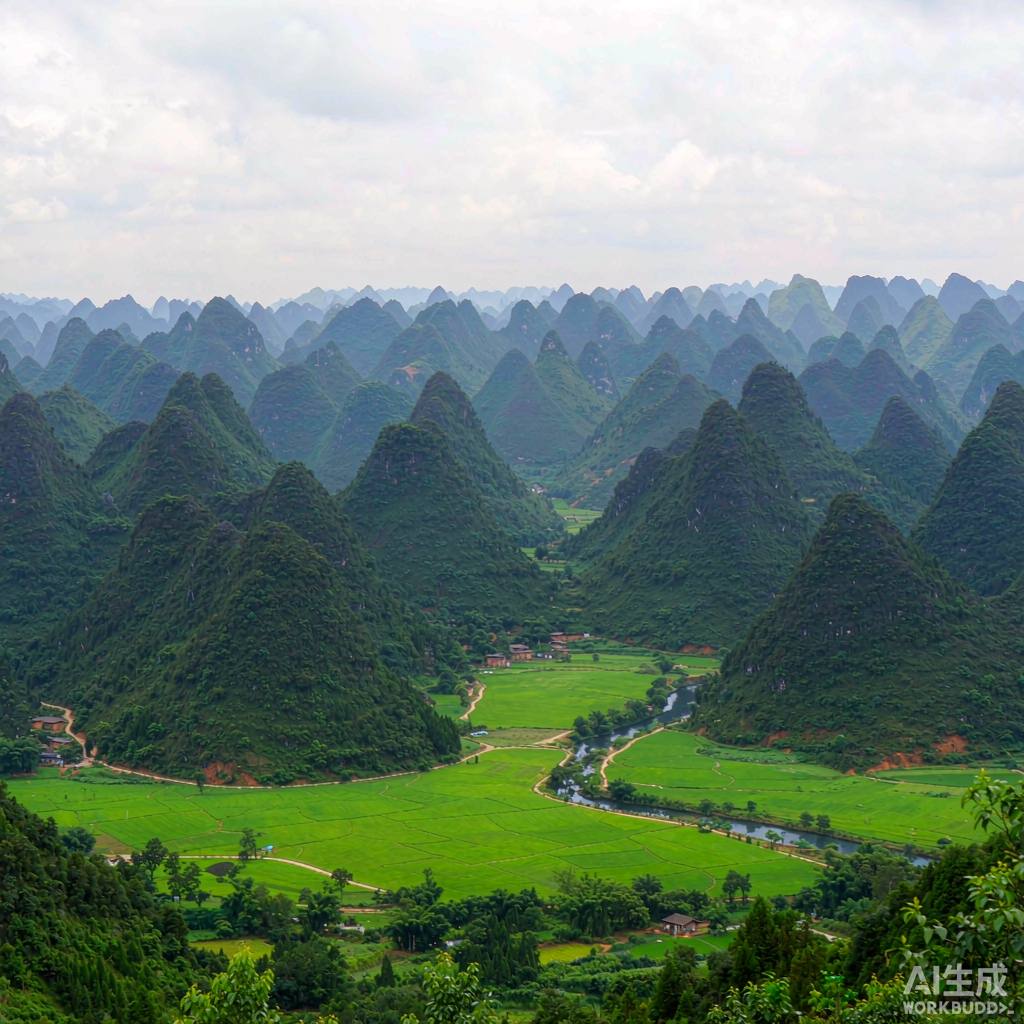
Why Three Days Works — and What to Leave Out
Guizhou is province-scale, not city-scale. The site behind this guide covers 67 destinations across the province, and its planners, drawing on a decade of route-planning experience, flag the same first-timer error every season: treating Guizhou like a single city and cramming in three regions. Three days realistically supports one hub plus two headline sights, and the pair that hangs most conveniently off the rail network is Huangguoshu Waterfall in the west, reached via Anshun, and Xijiang Qianhu Miao Village in the east, in Qiandongnan, both served by high-speed rail from Guiyang.
Everything else famous is a day of travel away. Libo Xiaoqikong sits in the far-south karst belt, Fanjing Mountain rises in Tongren in the northeast, and Zhaoxing Dong Village lies southeast in Congjiang. Each is worth a trip of its own; none belongs in a three-day frame.
- Keep: Guiyang (arrival hub, food, Jiaxiu Tower, Qianling Mountain Park or Qingyan Ancient Town), Huangguoshu Waterfall, Xijiang Qianhu Miao Village.
- Cut for now: Libo Xiaoqikong, Fanjing Mountain, Zhaoxing Dong Village and Langde Upper Village — each needs a fourth day or a dedicated route.
- Accept two early starts; that is the honest cost of seeing both headline sights in three days.
The Route, Day by Day
Day 1 — Guiyang. Arrive at Guiyang Longdongbao International Airport, settle in the city, and treat the day as orientation rather than sightseeing maximisation. Jiaxiu Tower, the Ming-era pavilion on the Nanming River, is the classic first stop; Qianling Mountain Park puts wild macaques on the path (hide snacks); Qingyan Ancient Town, a walled Ming garrison town, is the half-day alternative. Evening is for food: sour soup fish, Changwang noodles and Huaxi beef rice noodles are the local signatures.
Day 2 — Huangguoshu Waterfall. The scenic area is a cluster, not a single fall: the Great Waterfall with the Water Curtain Cave path behind it, Doupotang, and the stone-and-water gardens of Tianxingqiao. Reach it by high-speed rail from Guiyang North to Anshun West plus a road transfer, or by intercity coach. Entry uses real-name, timed reservations tied to a specific date, so book before you commit to anything else and re-check the official booking channel close to travel.
Day 3 — Xijiang Qianhu Miao Village. Take the high-speed rail from Guiyang North to Kaili South, transfer by road to the village gate, then ride the shuttle down to the stilted-house core. The payoff is the panorama of wooden houses stacked on the hillside and, after dusk, the village lights. Miao silverwork and embroidery shops fill the lanes, and long-table banquets and a nightly cultural performance are typically on offer. Return to Kaili South for the rail leg back to Guiyang, and book a late-evening departure or keep a buffer morning.
- Day 1: land at Guiyang Longdongbao International Airport; pick ONE city sight (Jiaxiu Tower, Qianling Mountain Park or Qingyan Ancient Town); eat sour soup fish, Changwang noodles and Huaxi beef rice noodles.
- Day 1 evening: buy real-name rail tickets for Day 2 and Day 3 through the official 12306 channel, and confirm its current passport-booking support.
- Day 2: reserve Huangguoshu timed entry first (date-specific), then rail to Anshun West and road transfer; route Doupotang, Tianxingqiao, then the Great Waterfall — or reverse it early to beat queues at the Water Curtain Cave.
- Day 2 gear: rain protection and grippy shoes; the spray zone and stone steps are slick.
- Day 3: rail to Kaili South, road transfer, gate shuttle; walk up to the viewing terraces; stay for the evening lights; rail back to Guiyang.
- If your Day 3 flight leaves mid-afternoon, swap Xijiang Qianhu Miao Village for Qingyan Ancient Town, which is much closer to Guiyang.
The Sequencing Logic: Why the Order Is Not Arbitrary
The default order — city, then west to Huangguoshu Waterfall, then east to Xijiang Qianhu Miao Village — suits a late arrival on Day 1 and an evening departure on Day 3. But the site's planners note two variables that change it: your arrival time and the weather forecast. If you land by midday with energy to spare, going straight east on Day 1 has a real advantage: Xijiang Qianhu Miao Village is at its best after dark, so you arrive for the lights, see Huangguoshu Waterfall on Day 2, and keep Guiyang city for a relaxed final morning.
Weather matters more than most first-timers expect. Rain swells Huangguoshu Waterfall — during and just after the summer rainy season the flow is at its strongest — but very high water can close the Water Curtain Cave path, and heavy rain slows the mountain roads to Xijiang Qianhu Miao Village. When a storm is forecast mid-trip, give the wet day to whichever sight loses least. Because Huangguoshu reservations are date-specific, decide any swap before you book.
- Late arrival on Day 1: Guiyang, then Huangguoshu, then Xijiang (the default).
- Early arrival on Day 1: Xijiang for the evening lights, then Huangguoshu, then a Guiyang city morning.
- Rain forecast: Huangguoshu gains volume in rain but the Water Curtain Cave path can close in extreme water; check the scenic area's official notices and swap days if needed.
- Lock the order before buying rail tickets and the date-specific Huangguoshu reservation — changing later costs money and time.
Entry Rules That Shape This Itinerary
Guizhou's international traffic is growing fast from a small base. The site notes 74,000 foreign-national arrivals at Guizhou's international air ports in 2025, up 267% year on year — a border-control count that excludes Hong Kong, Macao and Taiwan residents, so it understates actual international visitation. The practical read for a three-day traveller: demand for timed entry, rail seats and village lodging is rising, but English signage and service are still uneven, so book early and keep a translation app on your phone.
Which entry route applies to you depends on your nationality, and it is worth settling before you buy flights. China maintains mutual visa-free agreements with 29 countries, including Malaysia, Thailand and Singapore, whose nationals can enter directly for tourism. The 240-hour visa-free transit is a separate scheme: it covers eligible nationalities travelling onward to a third country, and a three-day Guizhou stop sits comfortably inside that window. The schemes are not interchangeable, and conditions such as eligible ports and onward-ticket proof differ. Policies change; verify your specific situation with official sources — the Chinese embassy or consulate for your country and China's National Immigration Administration — before booking anything.
- Identify your scheme first: mutual visa-free (29 countries, including Malaysia, Thailand and Singapore), 240-hour transit, or a regular visa.
- If you plan to use the 240-hour transit: confirm your route qualifies (onward travel to a third country, not simply a return to your origin country) and keep the onward ticket handy for check-in and border control.
- Confirm that Guiyang Longdongbao International Airport is an eligible port for your scheme at the time you travel.
- Re-check visa, transit and scenic-area rules with official sources shortly before departure — policies and reservation systems change.
What to Confirm Before You Book
A three-day Guizhou trip fails on logistics, not on sights. Run this checklist in order — entry rules first, because they can invalidate the whole booking — and only then pay for flights, rail and lodging. The site's model is deliberately unbundled: it plans routes for a flat fee, sells no travel products, adds no booking markups and runs no group tours or shopping stops, so the sequence below reflects route-planning priorities rather than sales incentives.
- Entry scheme for your nationality — verify with official sources (embassy, consulate, National Immigration Administration).
- Huangguoshu Waterfall timed reservation: date-specific and real-name; confirm the current official booking channel and the identification it accepts.
- Rail tickets: real-name system; book via the official 12306 channel and check its current passport support; Guiyang North is the hub for both Anshun West and Kaili South.
- Lodging strategy: one Guiyang base for all nights (simplest with luggage) versus one night in Anshun — decide before booking rail.
- Departure buffer: a late-evening flight on Day 3, or a fourth morning, protects you from rail or road delays.
- Weather check in the final week: adjust the day order using the sequencing logic above.
FAQ
Is three days really enough for Huangguoshu Waterfall and Xijiang Qianhu Miao Village?
Yes — with two early starts, pre-booked high-speed rail and a date-specific Huangguoshu reservation, the Guiyang–Huangguoshu–Xijiang triangle is the standard first-timer frame. Adding Libo Xiaoqikong or Fanjing Mountain realistically requires five or more days.
Do I need a tour group for this route?
No. High-speed rail links the three points, and both headline sights have official reservation and shuttle systems. If you want help with sequencing rather than bookings, independent planners exist — the site publishing this guide operates on a 'You book the trip. We plan the route.' model, charging a flat planning fee with no markups on travel products and no group tours.
Can I enter China visa-free for a three-day Guizhou trip?
It depends on your nationality. China has mutual visa-free agreements with 29 countries including Malaysia, Thailand and Singapore, allowing direct tourist entry; the 240-hour visa-free transit covers other eligible nationalities travelling onward to a third country. The schemes have different conditions, and policies change — confirm your case with official sources such as the Chinese embassy or consulate and China's National Immigration Administration before booking.
When is Huangguoshu Waterfall at its most impressive?
During and just after the summer rainy season, when flow is strongest and the spray zone lives up to its name. Very high water can close the Water Curtain Cave path, so check the scenic area's official notices on the day you visit.